LX-OR-01
limbgenix@gmail.com

Custom Orthotic Bracing & AFO Solutions in Gwalior
Orthotics, commonly known as braces, are devices designed to correct, support, or replace musculoskeletal functions lost due to injury or congenital irregularities. They are also essential for preventing deformities. At Limbgenixx, we use state-of-the-art, lightweight components to create precision-fitting orthoses that ensure the best possible fit. Additionally, we employ computer-aided design/manufacturing (CAD/CAM) and microprocessor technologies when appropriate. Orthotic care at Limbgenixx begins with a personalized consultation with a clinician, which includes evaluation, recommendations, treatment planning, education, and rehabilitation. Our practitioners' primary role is to design and fit custom-made orthotic devices. Our team is dedicated to providing patients with the most effective orthotic solutions and continuously advancing orthotic care through research and education.
Our orthotic practitioners create a wide range of precise, custom-fit devices, including complex bracing systems, spinal orthoses, neck orthoses, diabetic shoes, and cranial helmets. Treatments and services at Limbgenixx cover various needs, including pediatric care, cranium, spine, and upper and lower extremity orthotics, ensuring comprehensive care for all patients.


Types of Orthotics

Functional Orthotics
Functional orthotics improve foot mechanics and alignment, alleviating pain and enhancing mobility.

Accommodative Orthotics
Accommodative orthotics provide cushioning and support, managing conditions like arthritis and foot ulcers.

Pediatric Orthotics
Pediatric orthotics address developmental issues, supporting healthy growth and correcting gait abnormalities.

Sports Orthotics
Sports orthotics enhance athletic performance and reduce injury risk with activity-specific support and alignment.
Foot Orthoses, Insoles & Footwear
Foot orthoses are among the most commonly prescribed orthotic devices, and they are closely tied to the footwear they sit inside. Our foot care work covers:
- Custom foot orthotics & arch support — the prescribed device, after biomechanical assessment
- Custom orthotic insoles — insole types, materials and footwear fit
- Diabetic foot orthotics & insoles · diabetic footwear, shoes & sandals
- Offloading footwear · Charcot foot solutions
- Plantar fasciitis / heel pain orthotics · sports orthotics
- Foot care & diabetic solutions overview
Where Our Patients Travel From
Patients travel to our centres from across India. These regional guides explain how a visit is planned:
- Madhya Pradesh — our home state
- Himachal Pradesh — including our Dharamshala centre
- Delhi NCR · Chandigarh Tricity
- Punjab · Haryana · Rajasthan · Uttar Pradesh · Gujarat · Maharashtra · Jammu & Kashmir
Orthotic Devices We Make
Photographs of devices made and fitted at our own workshop — AFOs, KAFOs, polio calipers, spinal orthoses, hip orthoses and knee bracing. Custom devices are cast from the patient’s own limb, so every one of these was made for a specific person. Patients travel to us from across Madhya Pradesh, Himachal Pradesh, Delhi NCR and the Chandigarh Tricity.
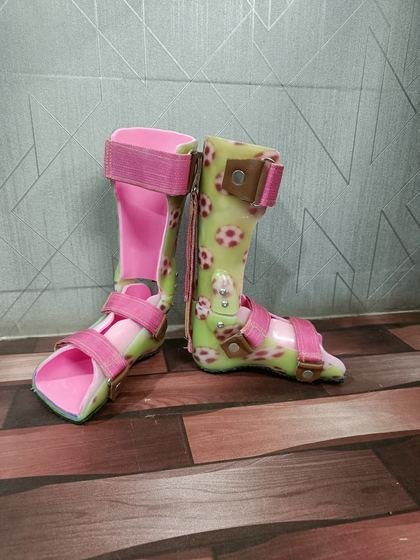
Moulded to a cast of the child’s own leg, with the pattern chosen by the child — which matters more than it sounds, because a brace a child likes is a brace they will actually wear.
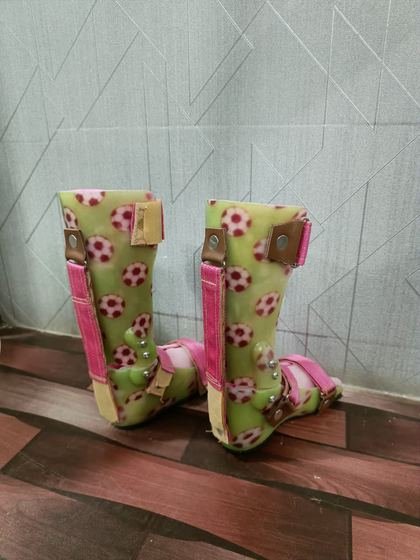
The posterior shell and calf strap seen from behind. Trimlines are cut to give the control the child needs without restricting more movement than necessary.
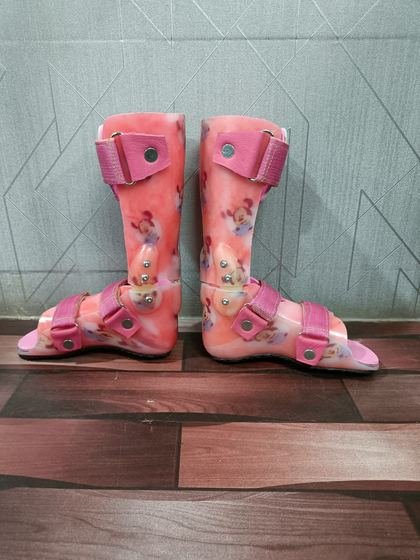
Another custom pair, same clinical job, different finish. Print options are offered on children’s devices at no change to how the brace works.
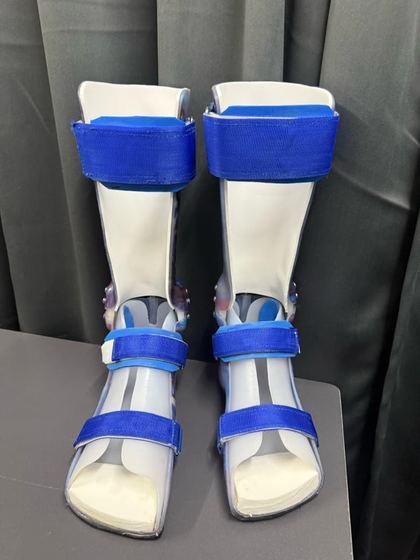
A solid-ankle design where the ankle needs holding at a set angle rather than allowed to move. Used for more marked drop foot and for spasticity.
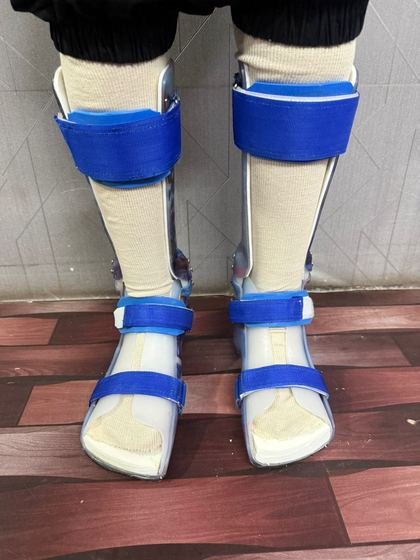
A finished pair as worn. The AFO sits inside normal footwear, which is part of why shoe choice is discussed at the fitting rather than afterwards.
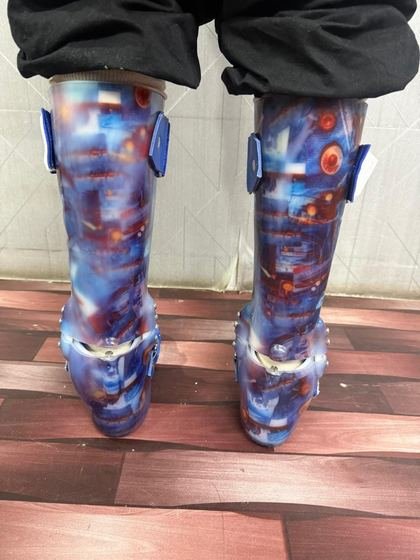
The same pair from behind. The calf shell and ankle trimline are where the control comes from, and where fit problems show up first.
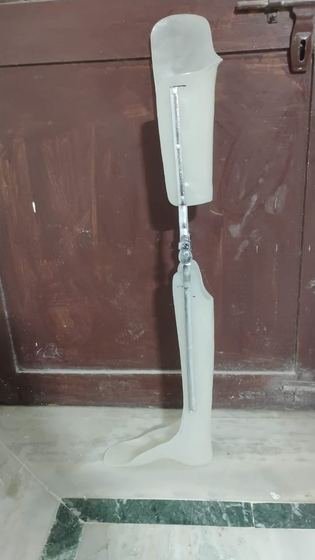
A moulded KAFO with knee joints. Spreads load over a wide contact area rather than a few straps, and fits inside clothing more easily than a metal upright design.
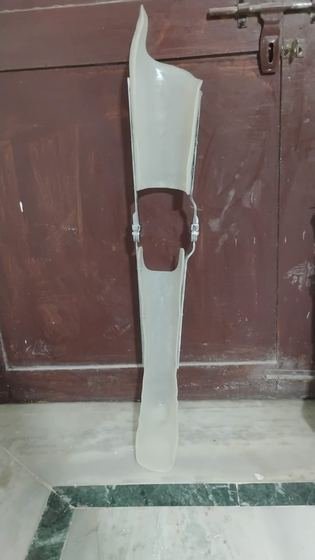
Side view showing how the knee joint lines up with the patient’s own knee centre. Getting that alignment right is most of the work.
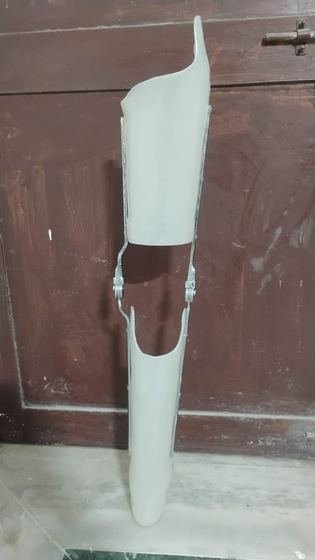
The complete device from thigh to foot. Made in our workshop from a cast of the limb.
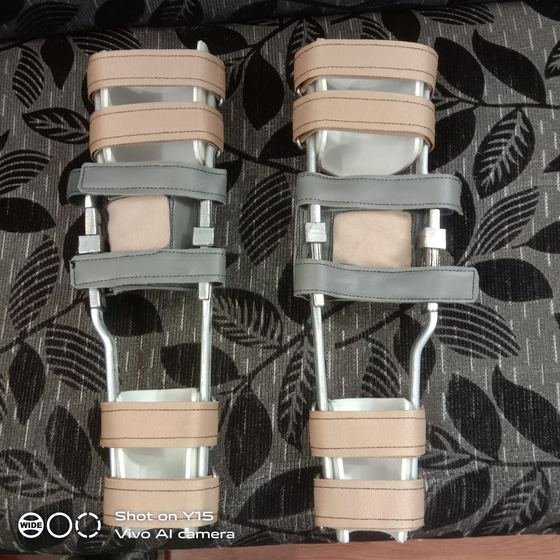
The conventional design — steel or aluminium uprights with padded cuffs. Robust, adjustable with basic tools and repairable in most towns, which is why it is still widely chosen.
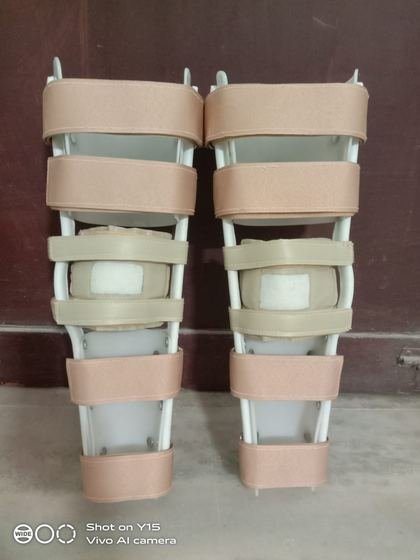
A matched pair for bilateral use. Straps and padding are replaceable items and are among the most common service jobs.
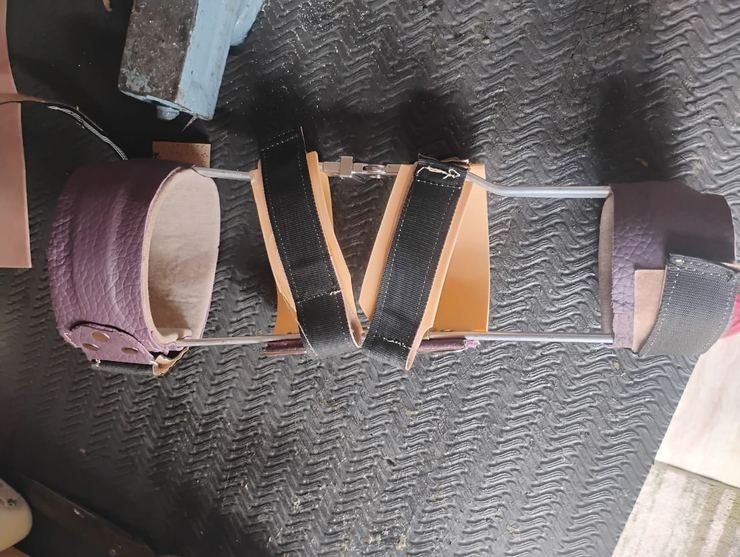
Leather cuffs over a jointed frame. The knee joint can be locked for walking and released to sit, depending on what the assessment calls for.
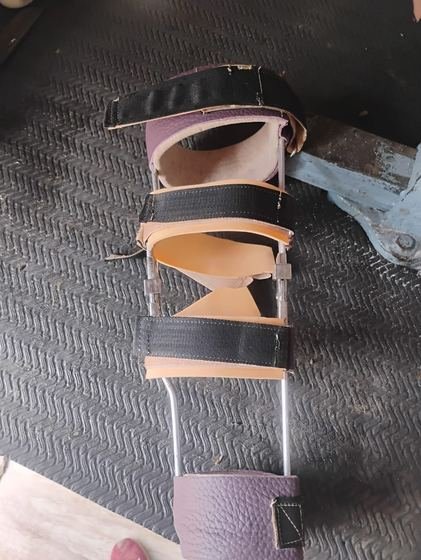
Part-built, in the workshop. Devices are made here rather than ordered in, which is why adjustments can be done while you wait.
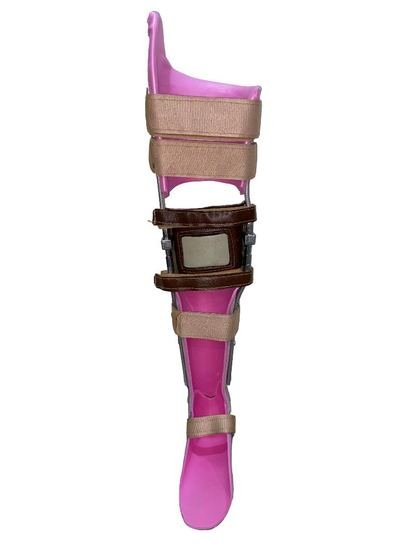
A children’s KAFO. Growth means these need reviewing and remaking on a schedule — that is normal, not a fault in the device.
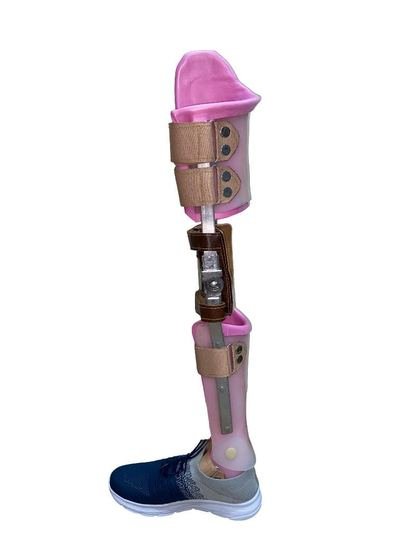
Shown with the shoe it works with. Alignment assumes a particular heel height, so changing shoe type changes how the brace behaves.
What most people in India call a caliper is clinically a KAFO. Made for post-polio residual weakness and other causes of an unstable knee — see the polio caliper page.
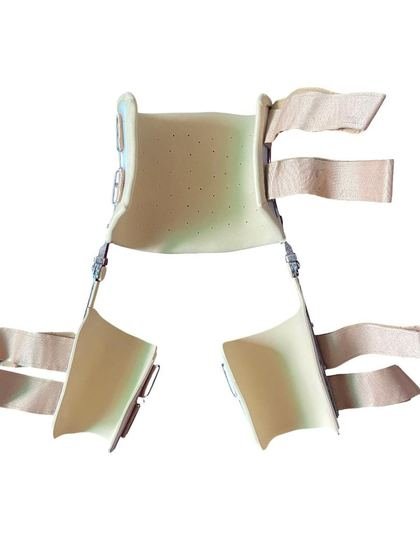
Controls hip position where the hip itself needs holding, not just the knee and ankle below it.
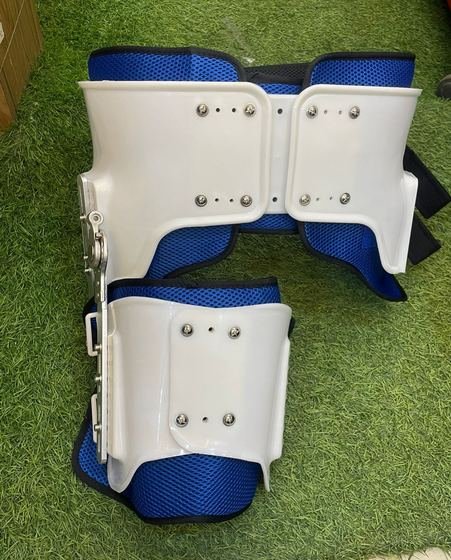
Holds the hips in a set position. Used in children where that position has been specifically advised by the treating clinician.
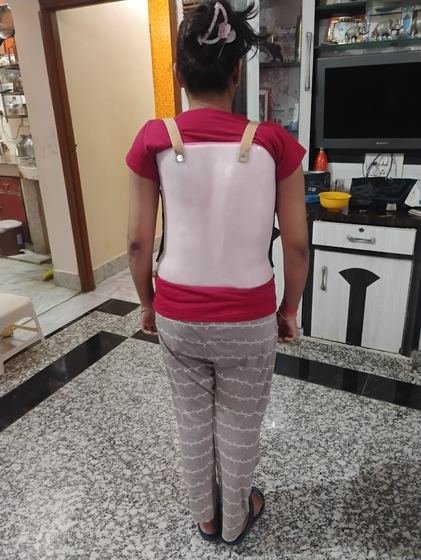
A moulded thoracolumbosacral orthosis as worn. Made from a cast of the torso, so it follows the patient’s own shape. See scoliosis bracing.
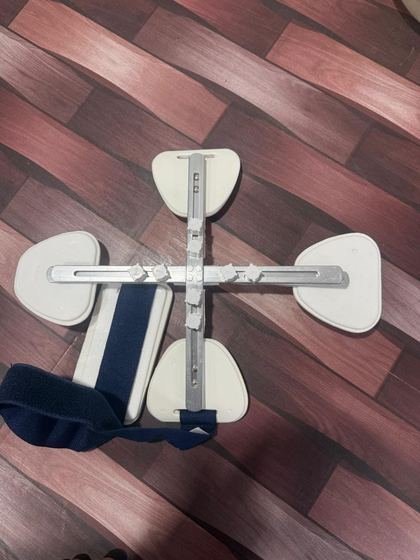
The cruciform frame with adjustable sternal, pubic and lateral pads, used where extension of the spine needs maintaining. Fitted and adjusted in person.
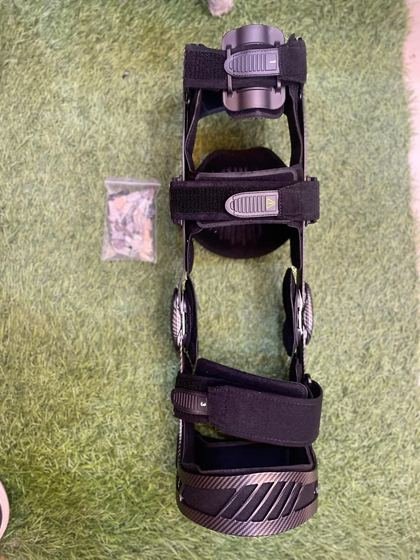
Range-of-motion stops let the permitted bend be set and then progressed, which is why these are common after knee surgery and ligament injury.
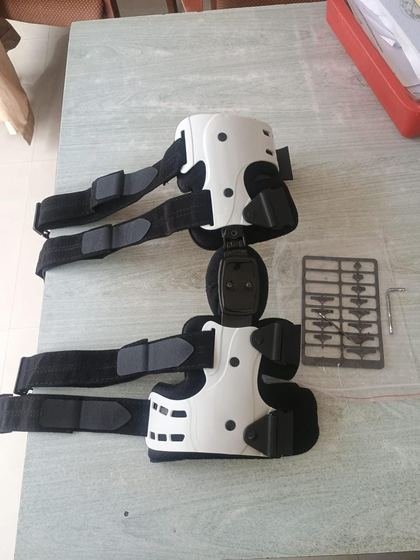
A matched pair. Setting the hinge stops is a clinical decision — follow what your surgeon or physiotherapist has specified.
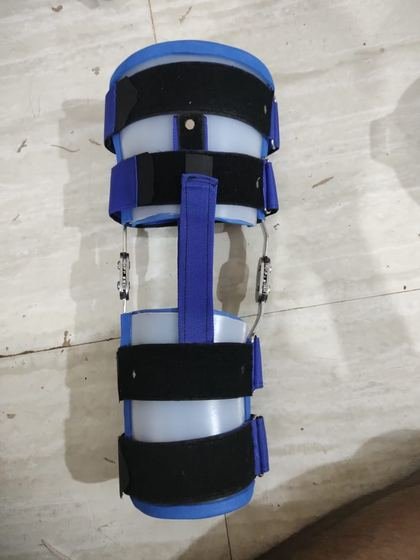
A moulded hinged knee orthosis. Chosen where a stock brace will not hold a particular knee properly.
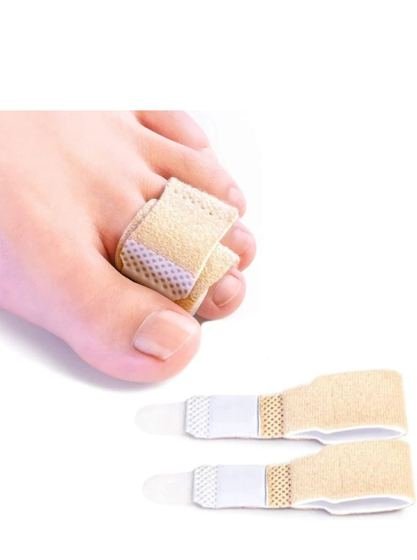
A small toe splint for hallux valgus. Designed to hold the toe in position and reduce rubbing between toes; it does not correct an established bony deformity.
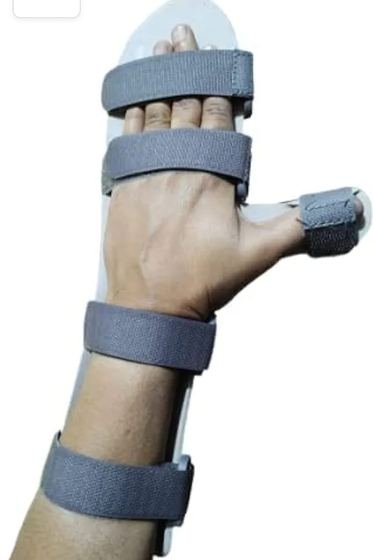
Holds the wrist, hand and fingers in a resting position. Commonly used after stroke and in conditions causing spasticity, to maintain position and reduce contracture risk.
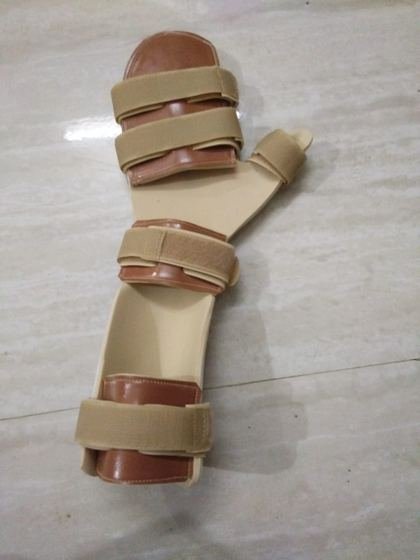
Moulded to the forearm and hand with a thumb section. Leather-finished for comfort against the skin over long wear.
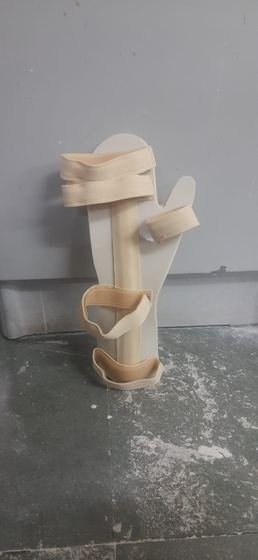
Made from a cast of the patient’s own hand so the arch and thumb position are correct, rather than forced by a stock shape.
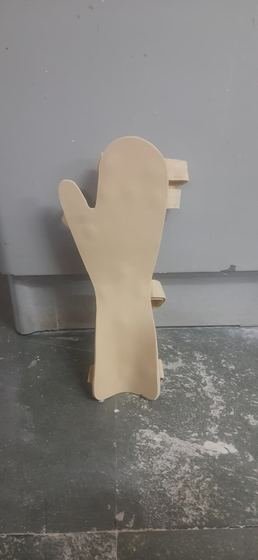
Part-finished, in our workshop. Splints are made here rather than ordered in, so trimlines and straps can be adjusted while you wait.
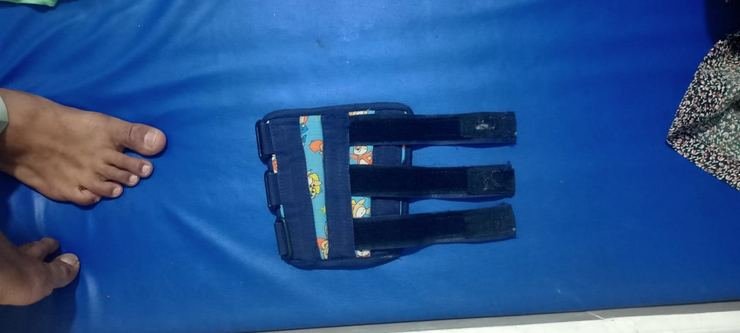
A children’s wrist splint with a print finish. Comfort and a design the child accepts matter, because a splint that is refused is not doing anything.
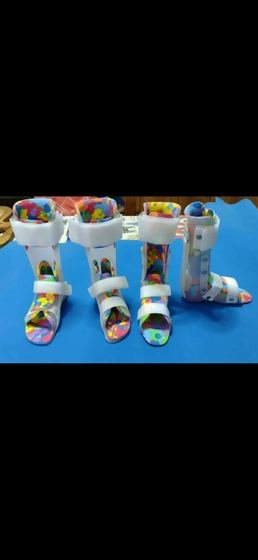
Several sizes made for growing children. Paediatric AFOs are remade as the child grows, which is expected rather than a fault.
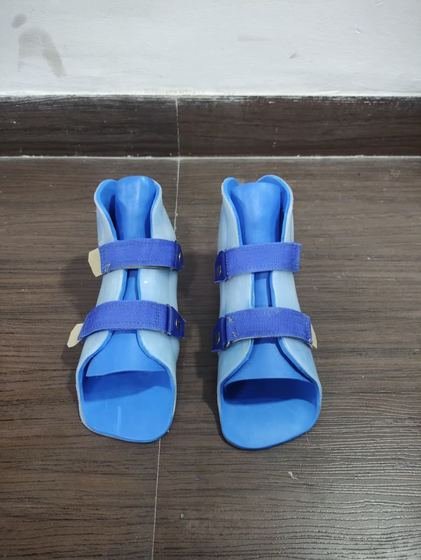
Custom moulded pair for a child. The trimline at the ankle sets how much movement is allowed, which follows the assessment.
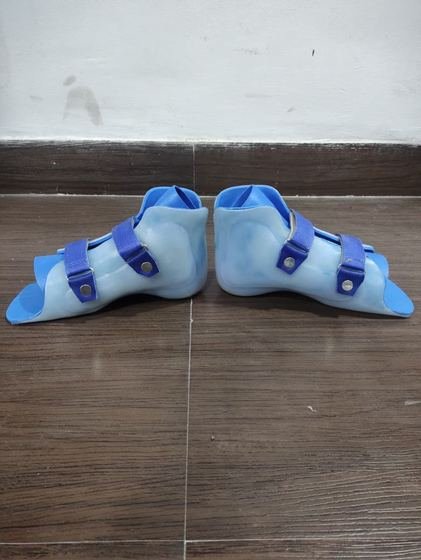
Side view showing the footplate and posterior shell. Length of the footplate affects push-off and is trimmed to the child.
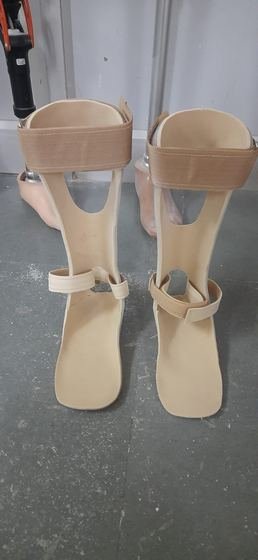
An adult pair moulded from casts. Used for drop foot, ankle instability and weakness from neurological conditions.
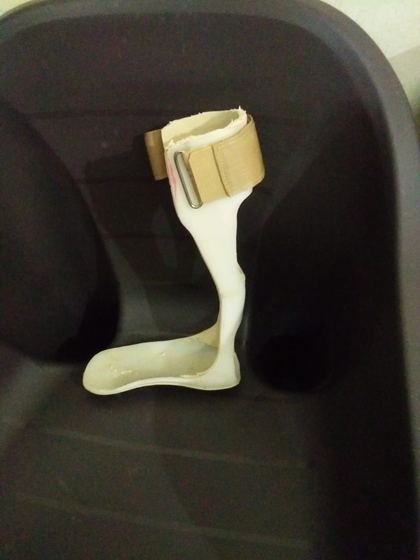
A single-side AFO, the most commonly fitted orthosis for one-sided drop foot after stroke or nerve injury.
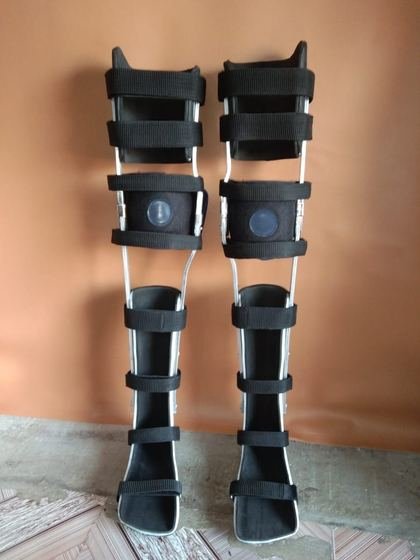
A bilateral pair with metal uprights. Robust and field-repairable, which matters for patients a long way from a fitting centre.
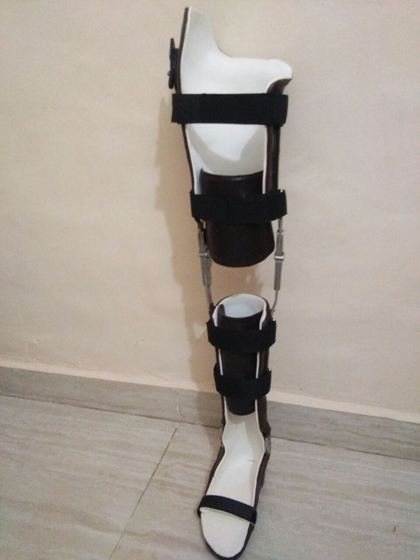
Full length from thigh to foot with a jointed knee. Leather cuffs over moulded shells, built from a cast of the leg.
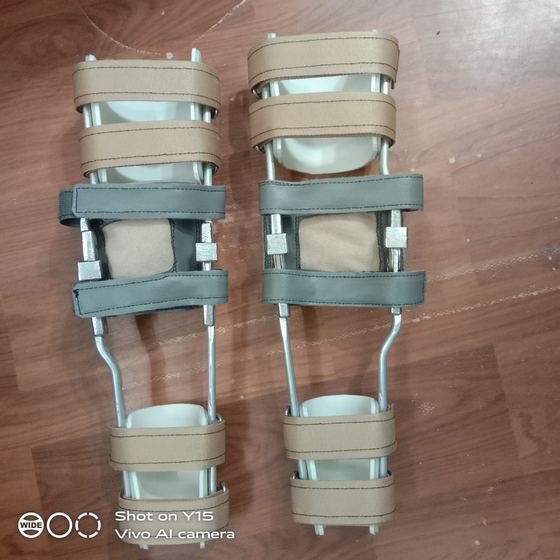
Cuff and strap construction on a bilateral pair. Straps and padding are replaceable and are the usual service item.
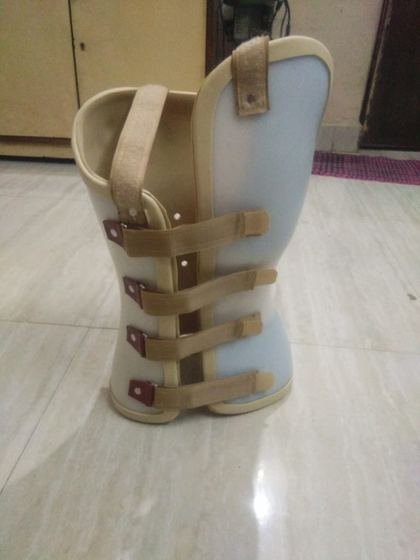
A thoracolumbosacral orthosis moulded from a cast of the torso, used where the spine needs supporting over a defined period.
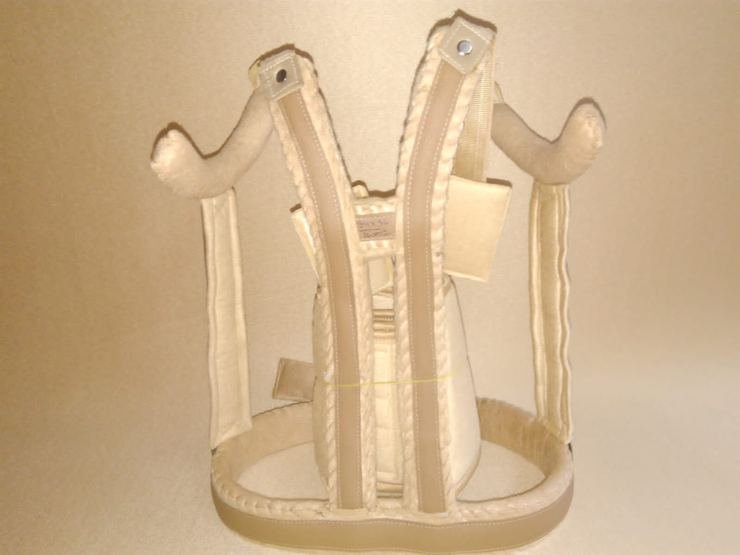
Frame-type spinal orthosis with adjustable pads, used where extension needs maintaining. Fitted and adjusted in person.
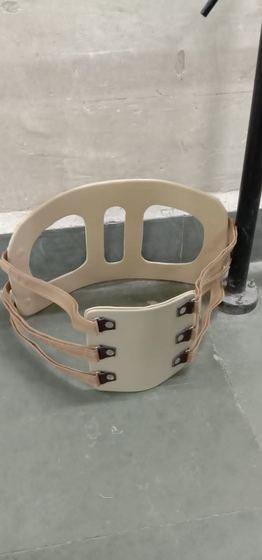
A moulded LSO giving firmer support than a fabric belt, for the lower back and sacral region.
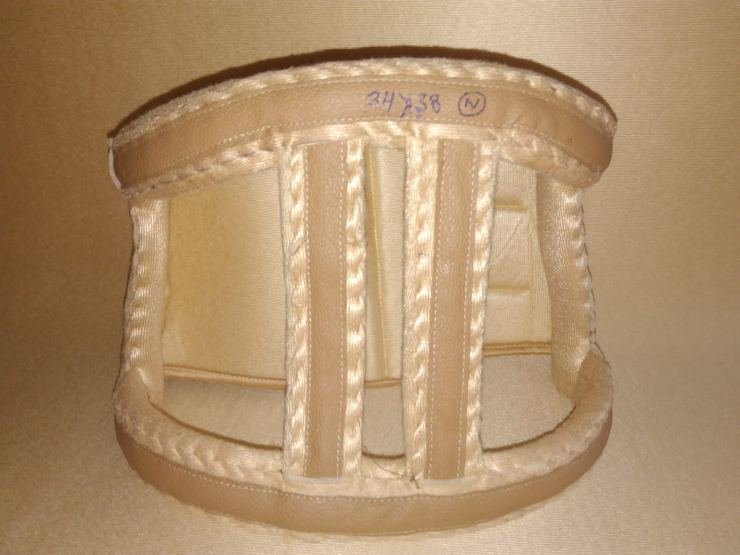
Interior view showing the stays and lining. Made to measurement so the stays sit where the support is needed.
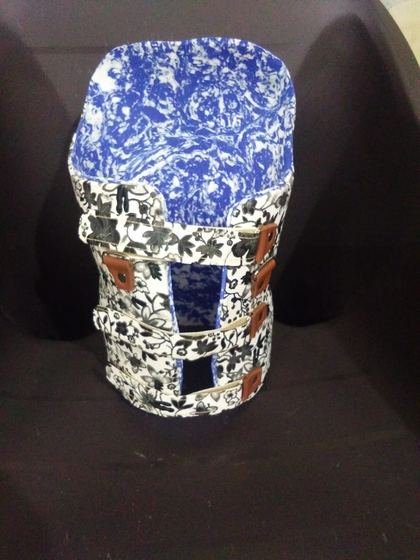
Moulded spinal brace in a chosen finish. For an adolescent who has to wear a brace for long periods, appearance affects whether it is actually worn.
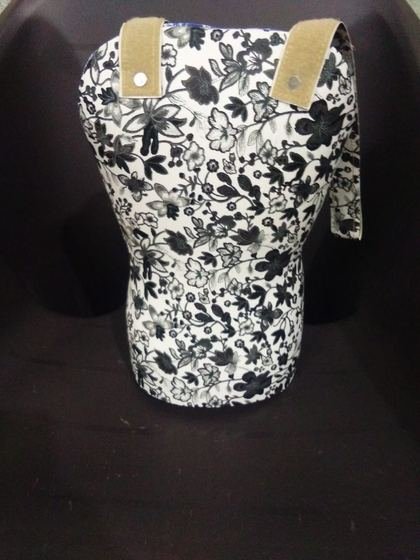
Rear view showing the closure. Strap tension is set at fitting and checked at review as the brace beds in.
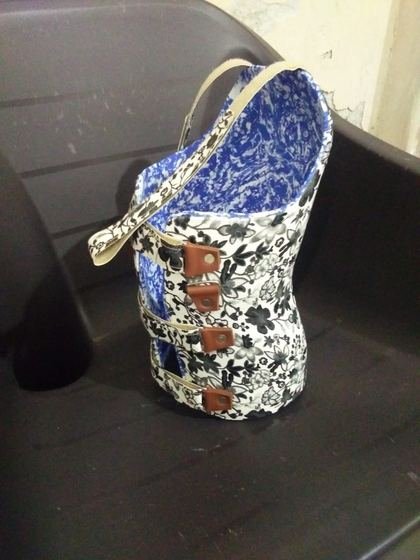
Side profile. Trimlines under the arm and at the pelvis decide both comfort and how much correction the brace can apply.
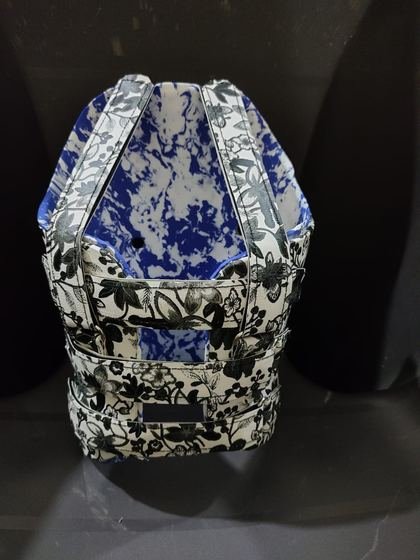
Interior contours moulded to the patient’s own torso. Relief and pressure areas are built into the shape, not added afterwards.
Need a Custom Orthosis?
Custom bracing is cast and fitted in person at our centres in Gwalior, Kharghar (Navi Mumbai) and Gharoh (Dharamshala). Message us first with your prescription or a photograph and we will tell you what your case is likely to need.
WhatsApp Us Contact & Directions