limbgenix@gmail.com

Pediatric Orthotics — Custom AFO, KAFO & SMO for Children in Gwalior, India
Pediatric orthotics are custom-made braces and devices designed specifically for children with musculoskeletal, neurological, or developmental conditions. Children's growing bodies require specially fabricated orthotics that accommodate growth, are durable enough for active play, and comfortable enough for daily wear.
At Limbgenixx, Gwalior, our pediatric orthotists specialize in working with children and their families. We provide custom pediatric AFOs, KAFOs, SMOs, wrist splints, spinal orthoses, and specialized footwear for conditions including cerebral palsy, spina bifida, clubfoot, scoliosis, and developmental delay. Serving children from Gwalior, Madhya Pradesh, and across India.
Types of Pediatric Orthotics
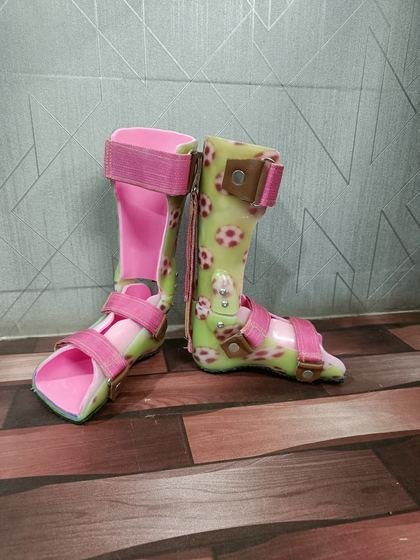
Pediatric AFO (Ankle Foot Orthosis)
Custom AFO for children with drop foot, cerebral palsy, spina bifida, and ankle instability. Available in solid, dynamic (DAFO), and articulated designs. Sized for growing children with growth adjustment features.
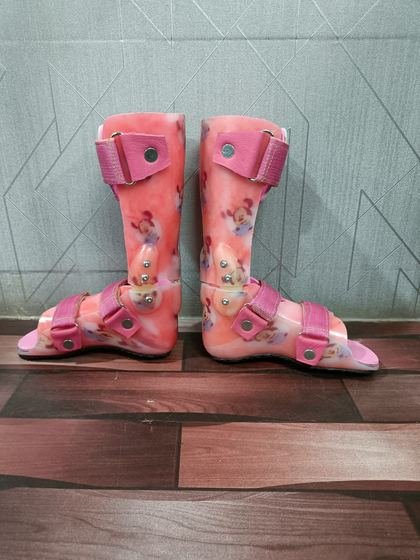
Pediatric SMO (Supramalleolar Orthosis)
SMO supports the ankle and hindfoot while leaving the calf free. Ideal for children with mild low tone, in-toeing, out-toeing, and flexible flatfoot. Less restrictive than AFO — children adapt well to SMO.
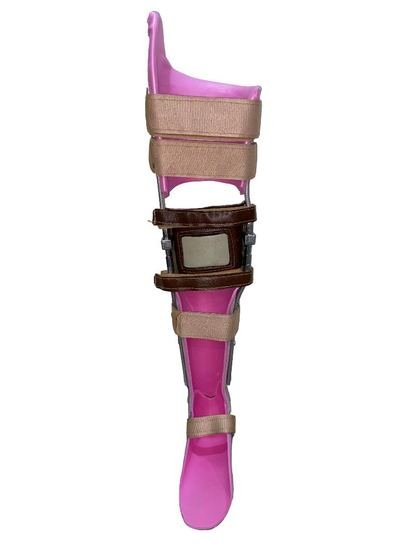
Pediatric KAFO
Full lower limb brace for children who need both knee and ankle-foot support. Used for spina bifida (L3-L4 level), congenital lower limb hypoplasia, and severe lower extremity weakness. Includes growth adjustability.
Pediatric Wrist & Upper Limb Orthosis
Custom wrist splints, elbow orthoses, and shoulder supports for children with cerebral palsy (spastic hemiplegia), Erb's palsy, juvenile rheumatoid arthritis, and post-fracture rehabilitation.
Clubfoot (CTEV) Bracing After Ponseti Treatment
Clubfoot — congenital talipes equinovarus, or CTEV — is one of the most common conditions we brace for in children, and the bracing phase is the part parents find hardest. Limbgenixx makes foot abduction bracing for children who have completed the casting stage of Ponseti treatment.
Why bracing follows casting
The casting phase corrects the position of the foot. Bracing is what holds that correction while the child grows. Relapse is most likely in the years immediately after casting, and it is bracing — worn to the schedule the treating surgeon sets — that the correction depends on. This is the stage where families most often need support, because the casts are finished and progress feels complete.
What we make
- Foot abduction bracing — boots mounted on a bar, set to the abduction angle the treating surgeon specifies
- Replacement boots as the child outgrows the current pair, with the bar reset to the prescribed width
- Custom AFOs where these are prescribed as part of ongoing management
- Adjustment and refitting as the child grows — which, with children, is continuous
The wear schedule is set by the treating surgeon, not by us. How many hours a day, and for how many years, is a clinical decision belonging to the team managing your child’s treatment. We make the brace to that prescription and keep it fitting as your child grows. If bracing is causing skin problems or your child cannot tolerate it, tell both us and the surgeon — that usually needs a fit adjustment rather than abandoning the brace.
Growing Children and Why Review Matters
The practical difference between adult and paediatric orthotics is simple: adults are refitted when something changes, children are refitted because they grow. A brace that fits perfectly today has a limited life, and an outgrown brace stops doing its job before it becomes obviously too small.
- Check the fit regularly. Red marks that do not fade within about twenty minutes of removing the brace mean the fit needs attention.
- Watch the footwear. Shoes worn over an orthosis need room for it. Shoes bought without it will not fit.
- Expect refits. Budget for them. They are part of treatment, not a sign something went wrong.
- Bring the old brace to every appointment — wear patterns tell us things your child cannot.
We also make KAFOs, spinal braces and scoliosis bracing for children. See Kare for Kids for how we work with younger patients.
In Mumbai or Navi Mumbai?
Our Mumbai centre is Om Prosthetics & Orthotics Center in Sector-19 Kharghar, open every day 11:00 am–8:00 pm, with home visits available across Mumbai. See children’s orthotics in Mumbai.
In Indore, Ujjain or Ratlam?
Our centre for this region is Shri Krishna Orthopedics in Indore, open every day 9:00 am–7:00 pm. See children’s orthotics in Indore.
Frequently Asked Questions
Children can start wearing orthotics at any age, including infancy. Foot orthoses (SMO, insoles) are often started when children begin standing (9–14 months). AFOs may be fitted as early as 6–12 months for children with cerebral palsy or spina bifida. Early intervention is key — orthotics during growth years can prevent deformity progression.
Pediatric AFOs are prescribed for: cerebral palsy (spastic diplegia/hemiplegia causing equinus or crouched gait), spina bifida (below L4 level), drop foot from peroneal nerve palsy, Charcot-Marie-Tooth disease, muscular dystrophy (to delay contractures), post-clubfoot surgery, and other conditions causing ankle instability or foot drop in children.
Growing children typically outgrow an AFO every 12–18 months. The brace also needs to be checked at every growth spurt. Limbgenixx recommends AFO check-up appointments every 6 months for children to monitor fit, growth, and any changes in the child's condition.
An SMO (Supramalleolar Orthosis) covers only the ankle/hindfoot area, ending below the calf. It controls hindfoot alignment (valgus/varus) and is used for mild conditions like flexible flatfoot and mild low tone. An AFO extends to mid-calf and controls ankle motion — it is used when the ankle needs active support against drop foot or spasticity. AFO is more restrictive but provides more control.
Yes. ALIMCO ADIP scheme provides free/subsidized orthotic devices to children with disabilities. State disability welfare schemes in Madhya Pradesh also provide support. Limbgenixx assists families in obtaining required documentation and disability certificates for government scheme applications.
Where Our Patients Travel From
Children outgrow braces, so follow-up matters. These guides explain how families from each region plan visits:
- Madhya Pradesh — our home state; Gwalior, Bhopal, Indore, Jabalpur and across MP
- Himachal Pradesh — including our Dharamshala centre serving Kangra, Shimla, Mandi and Kullu
- Delhi NCR — New Delhi, Gurugram, Noida, Faridabad and Ghaziabad
- Chandigarh, Mohali & Panchkula — Tricity patients
- Punjab · Haryana · Rajasthan · Uttar Pradesh · Gujarat · Maharashtra · Jammu & Kashmir
Book a Free Orthotic Assessment
Consult Limbgenixx orthotists in Gwalior. Expert orthotic care for patients from Madhya Pradesh and across India.
WhatsApp Us Now